Search This Blog

Showing posts with label Herbert Wescoat Memorial Library. Show all posts

Saturday, March 21, 2015

Never Less Than a Lady

Image result for coloring books for adults
These are the types of pictures I've been coloring.
I have taken time off from reading for the past couple of months. I seemed to need coloring and jigsaw puzzles. My right brain must have been feeling deprived. But with a spread of books in front of me and the longer hours of daylight, my inner reader is up and kicking. In the past week or so, I've been feeling restless with the visual and recognized a yearning for text. Here's what happened.


The blogger singing
earnestly at the St.
Patrick's show.
Last Saturday, I performed in a St. Patrick's Day revue at the dearly-loved Herbert Wescoat Memorial (Vinton County) Library. The show was totally fun and wacky--singing, dancing, skits, sketches, recitations on an Irish theme. The cast ended up using community room as the "green room" and it was full of the remains of the quarterly book sale. The tables were piled with every genre of fiction, from dull classics to racy paperbacks. And they said to us, "the more books you take, the fewer we have to pack up tonight." A medium-sized boxful of books later, I was eager to sit down and read my heart out.

This is a long way to say that I just finished a book that I plucked from the book sale on the night of the St. Patrick's Day celebration. It was a regency romance by Mary Jo Putney called Never Less Than a Lady. And it was everything a regency romance should be--funny, wry, sweet, sexy, and star-crossed. All regencies are pretty much the same.

    Image result for Never Not a Lady Putney
  • Man meets woman.
  • Man and woman hate each other.
  • Hate is really fear of attraction.
  • Man and woman declare love and have marriage and sex (or sex and marriage, depending on the author).
  • Events separate man and woman.
  • They get back together.
  • The end.
All regencies have an element of Jane Austen about them--in the early nineteenth century settings, the importance of manners and appearances, and rigid gender roles to fight against or accept. In a sense, these books are developmental. The heroes and heroines start out with immature ideas of love and marriage and end up with a mature love. That's the pattern. But there's lots of fun along the way--disguises, danger, escapes, near misses. The gender roles are clear--woman is always protected and saved from peril by man; man is always missing some part of life and gets it from woman. This is the classic romance formula.

Image result for regency romance covers
Regency covers range from
suggestive to racy to downright
sexual!
Image result for regency romance coversImage result for regency romance covers


Never Less Than a Lady was good. A quick read. Brisk. Read it in one day. The heroine was living in disguise--everyone thought she was dead. The man helped her reclaim her life. a funny twist was that the heroine was a midwife. This was less key to the plot than anything else, a bit extraneous, but plausible in that it let the woman live on her own without suspicion. Another funny twist was the problem of who had the most money. Would the heroine still want to be married when she reclaimed her lost birthright? Would the man feel like he didn't need to save her anymore. A tempest in a teapot. I think both twists were attempts to modernize the content a bit, to increase its relevance to the modern woman.

No fear, though. The formula stands the test of time. And the romance makes more sense in the nineteenth century than modern romances do in the twenty-first. This romance was a great way to get back into the reading mode. Next up? Kathy Reich, the author of the Bones books.

Sunday, February 16, 2014

Poem of love written for Winter Soiree

Photo: Reposting my amazing hearts photo from a car pulling into and then backing out of a parking spot. Happy Valentine's Day.

Come What May

by Joy E. Dickreson, February, 2014


When you are scared, I will hold your hand
And stand beside you come what may
I’ll blaze the trail
I’m by your side
I’m right behind

When you are glad, I will dance with you
And prance with you come what may
I’ll whirl and spin
I’m in your arms
I lead, then you

When you are sad, I will cry with you
And offer my shoulder come what may
I’ll hold the pain
I’m holding you
I dry your tears

When you face injustice, I will fight with you
And right the wrong with you come what may
I’ll speak the truth
I’m angry too
I slay the beast with you

When you celebrate, I will laugh with you
And craft the victory speech with you come what may
I’ll toast the win
I’m cheering you
I sing your song

When the gray hair comes, I will remember with you
And face the unknown with you come what may
I’ll share the past
I’m treasuring you
I mourn you

I’m by your side
I lead, then you
I dry your tears
I mourn you
I good-bye you

Come what may

Wednesday, February 6, 2013

Great Northern? by Arthur Ransome

Great Northern?, by Arthur Ransome, is the final book in a long series, none of which I have yet read. I got this last book because it was the only title by this author in my library--I'll catch up with the other books as soon as I get caught up with other reading.

So, I was already supposed to know all the characters and the conventions of the series. These were: (1) children traveling to remote places with minimal adult supervision; (2) a mystery or adventure; (3) an environmental orientation; and (4) lessons woven through the text. Great Northern (I will leave off the question mark from now on) was very much a here and now book. There were mysteries and unknowns, but it was the job of the children to find the actual or "real" source of the unexplained.

Please note that there was no "series cystitis" with this book--I gradually gleaned the conventions of the series--I was not whacked over the head with updates from previous books as is so common with modern mystery series.

This book was quite sweet. Eight children and one adult were on a yachting trip. At least, it seamed like a yacht-sized vessel. It had both sails and an engine--and the children were completely proficient with both technologies from their lifetimes of adventures. The real hero of this book is Dick, one of the younger children who took on the role of ship's naturalist (in the best tradition of Darwin). Dick's obsession was birds. He had a life list and had researched the birds he was likely (and unlikely) to see on this boat trip to the Hebrides off of Scotland. He makes a sighting of a nesting pair of what he thinks (hence the question mark) are great northern divers, which are thought to never nest in the British Isles. The book involves the development of a threat to the birds and the heroic action of the children (and Dick in particular) to save them.

Great Northern started off slow...each of the children was laboriously introduced, as well as the adult chaperon and the boat itself. As the plot unfolded, the book sped up some and although it was still quite a slow read, I found myself engaged in the action and the setting. I felt acutely the threat to the birds and fully appreciated Dick's bravery. Great Northern shows that action need not be destructive to be exciting.

This book is very British, very cheerio and stiff upper lip and noblesse oblige. The children are to be fitted for life through productive activity in an idealized setting. Quaint. The native Scots were pretty well stereotyped as bagpipe playing buffoons.

The success of this book was not in the plotting or the setting or the themes or the characters--it was in the detailed descriptions that led to my feeling that I had been on a vacation too. I have the distinct feeling that I was there, that I rowed to a small island in the dead of night with a camera, that I led the villains on a merry chase away from the birds. I was as sorry as the children in the book when the book ended.

Sidebar: New Resource

The reading list that I have now been working on since late 2009 has gotten a boost from my library's joining with other local libraries to combine their collections electronically if not physically. Now when I search the catalog of my local Herbert Wescoat Memorial Library, I can call up and reserve books from a half dozen or more libraries. So, I have high hopes of actually reading every single book on the Eager Reader's list that I downloaded on June 10, 2009, according to the printout.

Just to review: I work for a youth development organization. We are always challenging the young adults to set lofty goals and then to chip away at them for the long haul. I decided I needed a challenge for myself so I would participate also in this process. I chose the project of reading a 12-page list of books from Eager Readers--their list entitled "The Best of the Best." And most of the books have been great. And I have been greatly enriched. I thought that I might never find some of the books...but now that fear is dissolved. Full speed ahead...

Sunday, October 28, 2012

Church of the Dog, by Kaya McLaren

          My friend found Church of the Dog at the Herbert Wescoat Memorial (McArthur, Ohio) library book sale. She was charmed and amused by the title, as we have joked (not with great originality) about god being dog spelled backwards. We also go to church together and we both love (fiercely and delightedly) our dogs. She has a powerful golden retriever named Bailey and I have my nimble multibreed Marigold. So, Church of the Dog intrigued us on several levels before we even opened the book or read the kudos on the back cover. At 25 cents, how could we resist this book? My friend made the purchase.
          In a few weeks, she brought the book to me. She was consternated by it and offered it to me. I thought, oh no, is it all about sex or something? Then, I thought, it must be something else, because sex would probably not consternate this particular friend. So I took it and started in on it. My first impressions were not good. The book is based in an alternate spirituality that borders on witchcraft, but in a beautiful, nature-oriented way. The heroine travels in her dreams to meet other dreamers and sometimes meet with deceased people who were released to this dreamland world upon death. She reads auras and with special giftedness can manage auras--her own, those of others, and even large scale auras such as that surrounding a high school just after a Columbine-type shooting. (She and other “dreamers” dream-travel there like a team of psychic first responders.) This is not a type of spirituality I enjoy reading about.
 

          But, my friend wanted my impressions, so I struggled on. I had the book with me when I went to Denver on business at the end of October (2012). In the hotel room it was read or die of bad TV. I felt myself begin to submerge into the book, to accept instead of fight its premises and I started to enjoy the story and all of its fey qualities.
          At base, Church of the Dog is about transformation, about dealing with the painful blows life can sometimes inflict, about moving through and beyond, incorporating. The heroine is a traveler, a wanderer. She becomes (lets herself become) entangled with a family of farmers in Washington state or Oregon (can’t remember) that consists of an elderly married couple and the grandson they raised. Their son and daughter-in-law had been killed when the grandson was eight years old. The grandson survived the accident, shielded by the body of his dead mother.

          The trauma of the accident left the remaining family frozen in fear, guilt, pain. The deus ex machina heroine gradually thaws out this family, beginning with grandma, then grandpa, and finally with the grandson, now in his late 20s. She uses auras, saunas, hot springs, spiritual artifacts from many faith traditions and especially dancing as her tools. The dancing is especially wonderful and is a wonderful metaphor for the need for each of them to begin to dance the dance of life again. The descriptions of the dancing are rhythmic, lyrical, literally moving as well as figuratively. The old couple is reawakened in their love for each other as well as in their awareness of their grandson’s unfinishedness, frozenness. He has much business to attend to (the business of living) and needs to be freed to do it.
          That’s the basic story. I will not be giving spoilers. I recommend Church of the Dog as a little piece of beauty in our world, a book about benevolence and healing. Even if you don’t buy into the new age spirituality, the transformations of the characters are powerful, moving, and engaging. I felt pain with them and the tears of whatever it is when you untie a tough knot, untangle a necklace, release a tight fist. The tears come from the pain released when the blockage eases. It’s the shake of earth when the tectonic plates slip past a snag or the tsunami raises from a great movement under the sea.
         If you cannot step outside your own belief system for a little while to enjoy this book, I feel for you. I’ve had that problem with books--some of the ones on this very blog. And many, many times I have stepped inside the beliefs of Christianity to enjoy a book from within that perspective. Diving in the pond of another way of viewing the world is why I read in the first place. But sometimes I just can’t do it. Like, I’m not sure I could dive into the pond of totalitarianism to enjoy Mein Kampf, for example; or swim with hatred theologists. We all have our limits. So, if you can make it happen, enjoy Church of the Dog with me. I am warmer inside and more forgiving for having read it.

Saturday, October 22, 2011

Good Books: An American Freedom


  Probably one of my four copies of Pride and Prejudice

I went to the library this morning to pick up some books from interlibrary loan. It took two days for one book to arrive and three days for the other two. I saw that they were on loan from the Southeast Ohio library system and thought..."it is so cool that there is this gigantic stash of books available to whoever wants them, freely and with no restraint."

With good books in the passenger seat of my beat up old Honda, I felt a rush of wealth. I am wealthy in the availability of books of every description, as valuable to me as all the rubies, emeralds, and diamonds in the world, worth more to me than a Rolls Royce Phantom, enjoyed almost as much sometimes as my human relationships. I glory in this country's magnificent library system and the truly democratic institution that it is.
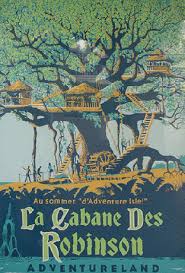
I live in a poverty-stricken rural area. People say, how can you live there, what is there for you, don't you miss city shopping and services? So far, no. The local library (Herbert Wescoat Memorial Library of McArthur, Ohio) is excellent and can get almost any book I ever want, from the most obscure scholarly tome to the next book on my children's reading list, Swiss Family Robinson. The librarians are professional and friendly, interested in my book choices, and glad to offer recommendations and opinions. The local library is an amazing treasure house of knowledge, entertainment, and, yes, freedom; it is a priceless jewel in a long, long strand of libraries across the United States.
If we could freely check out precious gems and elaborate jewelry, I think the stones would begin to loose their luster--and their value. They are, after all, crystals, minerals, and rocks and do not touch the mind or the heart. A book, however, exerts a hold over me that lasts as long as I live. The more that books are available, the more they are loved. In that sense, a book is like kindness--the more you pass it around, the more there is for everyone--not like those gems, which are hoarded and hidden.

Until recently, I had a book shelf where I kept "books to be rescured in case of fire." I have a sticker on my front storm door alerting firefighters to save my pets and I have always wanted one for my books. Maybe I just have an exaggerated attachment--the books I love I have read many, many times. At one time I had four different editions of Pride and Prejudice. Each book is an experience of life, of places, of history, of the solving of human conflicts.

And sometimes the books are plain old fun. One of my books, by Kate Wilhelm, is called Oh, Susannah! I picked up the book by accident, read it soon after, and was immediately smitten. It's what I call a "suitcase mystery"--a book where several identical suitcases keep getting switched accidently. Susannah is also a science fiction book in which the question of what makes someone have an identity is explored. It's also hilarious--leaving my cheeks streaming with laugh-tears. I've gotten hours and hours of pleasure from this slim volume. (Wilhelm, by the way, is an amazing writer across many genres--check her out.)

I recently reorganized my books, pruning out the dead wood, moving others to new places of prominence. I kept adding books to the shelf of books to be saved in case of fire...then it became two shelves, then three...and finally I realized that I needed to let go of my book class system. All the books I kept are created equal and equally important. Woe to the firefighters who come to my home. All books will be saved.

But, back to the freedom thing. I know that in many parts of the world literacy is low and books are unavailable. Or, the books that are available are filtered through a sieve of ideology, religion, or legislated morality. These places deprive their people of creativity, fascination, exploration, spirituality, humanity. If you are reading this blog, you are probably somewhat of a word person or a book person. Who would you have become if you hadn't had access to books? I cannot imagine myself in any form of existence without them. For this alone, I am a patriot and honor the founders of our nation who refused to set up any kind of orthodoxy of religion or ideology. We were to be free. We were to conduct our individual searches for meaning and identity. We were to sample of life's offerings in person or vicariously. We were to have books. And that makes us the wealthiest nation on earth.