Search This Blog

Showing posts with label Janis Joplin. Show all posts

Sunday, April 13, 2014

The Poems that Didn't Win

I submitted these poems to the Linda Ogle Russ Writing Contest at the Spring Literary Arts Festival and much to my chagrin, they didn't win. I love them too much to just weep silently, so I'm putting them here on the blog for all to share. The theme for this year's festival was "Inspriation, Imagination, Illumination."


Even Unto the Word

In the firmament of inspiration
New stars birth themselves from the
Struggles of a woman, a man: Rosa
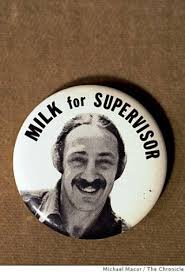
Parks; Harvey Milk; Bob and Jeannie Graetz.
In the firmament of inspiration
Resides the path
Even unto the Word.

In a reality that is
More real than real
Art takes shape. From the
Great and fertile void froths forth an
Inflorescence of the
New.
Even unto the Word.

Into the darkness a flash:
Lightning
Lucidity
Until which everything was fixed
Mirror reflects
Insight flames
Neon, hums and moans
Even unto the Word.


The Wander Woman
Tootle toot toot, here comes the wander woman
In her denim trousers patched over with blue velvet
And fluttering scarves pinned to her scarlet shirt—
A rainbow of butterflies.
Here comes the wander woman, tootle toot toot,
With her box of smellful powders she always carries by
And her stained glass shards in a satin bag
And her tootle flute held to her mouth,
Scents and colors and sounds.
The wander woman stops
And drops her box and bag upon the ground
And gathers round her the young, the young at heart.
The bag of glass is passed, and the box of smellful powders,
And each chooses with great impulse.
Then the wander woman toots her tootle flute, toot toot,
And the young, the young at heart,
Hold the shards to the sun
And fling the smellful powders,
And dance to the rhythm of the colors
And sing to the smell of the music
And inhale the notes of the song.
The wander woman’s song on her tootle flute
Turns color into sound into scent
Into laughing into breathing into seeing
Into vision into knowing into Now.
And the wander woman smiles and packs up
And wanders on...


Moments Inspire
Sitting in a tin can
Atop an explosion
Step out onto the moon
Neil Armstrong

Girls can do anything
Girls are the future
Let’s work with the girls
Karen Freberg

Come out into the light
I’m here to recruit you
I am someone you know
Harvey Milk

“Move or I calla cops”
“You may do that”
The world changed on a bus
Rosa Parks

Sign this document
Even though you may hang for it
Redefine freedom
Thomas Jefferson

What will my verse be?
Fighter? Writer? Agent of change?
I won’t be around to see.

I am me.

Wednesday, March 6, 2013

Starship Troopers, by Robert A. Heinlein

Here you see the full-body
suit and the spider
creatures.
Heinlein strikes again with a compelling first-person narration of the training and maturation of a space warrior. Starship Troopers (1959) tells the story of Johnnie Rico, who enlists in the military on a whim. In this world, only veterans of the military who serve two years or more can become full citizens with the right to vote, but that isn't Johnnie's prime motivation. He just goes along with a friend and then gets caught up in it.

As Johnnie moves through his basic training and then begins service in the mobile infantry (ground fighters who are transported by spaceship), he gains a deeper and deeper understanding of the the role of a warrior and finds that he is maturing into one. I liked Johnnie. I felt like I knew him.

The main enemy Johnnie is fighting is a spidery creature with an ant-like social organization. The infantry drops from the spaceship in multi-layered spheres. As they fall through the atmosphere, layers burn off one by one until finally there is a parachute and then free fall. Each soldier is encased in a huge armored fighting suit that allows him (they are all hims) to jump or bounce, so the final drop to the ground is cushioned by a firing of the bounce thruster--you hit the ground moving. The suit is fitted to the soldier and enhances all of his senses and physical prowess. Pretty cool.


In the movie, the full body armored suit
gives way to mere physique. The spider
is highly exaggerated.
Heinlein really is the master of first-person narration. The style is conversational and self-disclosing, like reading someone's journal or letters home or hearing them tell their story around a campfire or something. I was hooked almost immediately. The book opens with a scene of action and then flashes back to Johnnie's enlistment. The opening action made me eager to read on and find out how this character came to be in this predicament. So, within a few paragraphs, I knew I would finish this book and, truly, I could hardly put it down.

Now, I know I am a science fiction geek, but nothing in the description of Starship Troopers would indicate that I would particularly like it. Indeed, much science fiction writing is bad, bad, bad. But I've loved every Heinlein book I've read (see earlier posts). I attribute to this to Heinlein's terrific writing.

Heinlein justifies restricting the vote to military veterans by citing their willingness to put the needs of the many above their own needs. That places them above the regular everyday Joe. They also have a fantastic desire for survival--after all, dead soldiers don't vote. In the context of this book, that made some sense. Other of Heinlein's ideas for successful government were harder to swallow. He really does think that most people should not vote, for example. I skimmed through most of those sections of the book. However, you can see the author's ideas moving toward Stranger in a Strange Land. Interesting.

I have one more Heinlein book coming in through inter-library loan. I can't wait to get it. Another boost and cheerlead for Robert A. Heinlein.


Someone is grimacing in
almost every image from
the movie.
The 1997 Movie Starship Troopers
The same day that I finished this book, I scrolled through the TV listings and found that the 1997 movie of the same name was being shown that afternoon. The movie was loosely based on this book, but the movie was terrible, an adolescent nightmare of hormones and bravado. The magic of the book was its exploration of one soldier's response to his experiences; the book is not even very action-oriented. Not so the movie. Action was front and center. Every character was beefed up on steroids. Everyone overacted. There was none of the quiet camaraderie of the book. Alas.

The Year 1959
Paul Drake from the TV show Perry Mason
--no hair oil on top, but the sides are
plastered.
I was interested to find that this book was written the same year I was born. However, being set in the future, none of it takes place in 1959. I don't know what insight I might gain about my own life, the mindset into which I was born. If I use Heinlein as a guide, voting rights are not very high on the priority list. Everyone is white, although Johnnie is of Hispanic origins. Surprisingly, women are permitted in the military in Starship Troopers, but only as pilots--they have particular skills in this area, apparently. So, I guess this pretty much sums up 1959. Military solutions are in vogue, as is (as usual) dehumanizing (or buggifying) your enemies. Poor people are invisible.


Danish modern
I am fascinated right now by movies that were filmed in the years my parents were born or got married or the year I was born. I love looking at the fashions and the themes. Earlier in this blog, I reviewed a Perry Mason novel by Erle Stanley Gardner and became re-enamored of this TV series that was set in the very early 1960s and was considered to be somewhat fashion forward. I know that whatever is fashionable NOW seems like reality, so it's fun to see what the reality of my parents and their parents looked like. In the early 1960s, it seemed that we would all always smoke, we would all always have large cars (with running boards!), and Danish modern would prevail. Men would always have their hair oiled (except for Paul Drake) and women would have permanent waves and wear shirtwaists. Perry Mason was ahead in technology, using reel-to-reel tape recorders and other gadgets. My mom liked this TV show. I'm sure it influenced her.


Love the love beads, Janis,
but not the drugstyle.
The expectations of that world also shaped me. We were just coming out of the "man in the gray-flannel suit" period. Retail was everything and my dad managed a shoe store. Conformity was good, but not mandated. Maybe this toe in the 1950s is what makes me think that even if I had been a bit older and therefore qualified to be a hippi, I wouldn't have done it! I just wouldn't buy in to the lifestyle (drugstyle--another new word), even if I bought into the beliefs and the fashions. Who knows?

Today, my expectations are moderate. I no longer worry too much about the fate of the world. I try to practice "here-and-now-ism." What am I doing right now? Where I am I right now? What is happening at this time in this place and what role am I playing? Those are my questions.