Search This Blog

Showing posts with label Perry Mason. Show all posts

Wednesday, March 6, 2013

Starship Troopers, by Robert A. Heinlein

Here you see the full-body
suit and the spider
creatures.
Heinlein strikes again with a compelling first-person narration of the training and maturation of a space warrior. Starship Troopers (1959) tells the story of Johnnie Rico, who enlists in the military on a whim. In this world, only veterans of the military who serve two years or more can become full citizens with the right to vote, but that isn't Johnnie's prime motivation. He just goes along with a friend and then gets caught up in it.

As Johnnie moves through his basic training and then begins service in the mobile infantry (ground fighters who are transported by spaceship), he gains a deeper and deeper understanding of the the role of a warrior and finds that he is maturing into one. I liked Johnnie. I felt like I knew him.

The main enemy Johnnie is fighting is a spidery creature with an ant-like social organization. The infantry drops from the spaceship in multi-layered spheres. As they fall through the atmosphere, layers burn off one by one until finally there is a parachute and then free fall. Each soldier is encased in a huge armored fighting suit that allows him (they are all hims) to jump or bounce, so the final drop to the ground is cushioned by a firing of the bounce thruster--you hit the ground moving. The suit is fitted to the soldier and enhances all of his senses and physical prowess. Pretty cool.


In the movie, the full body armored suit
gives way to mere physique. The spider
is highly exaggerated.
Heinlein really is the master of first-person narration. The style is conversational and self-disclosing, like reading someone's journal or letters home or hearing them tell their story around a campfire or something. I was hooked almost immediately. The book opens with a scene of action and then flashes back to Johnnie's enlistment. The opening action made me eager to read on and find out how this character came to be in this predicament. So, within a few paragraphs, I knew I would finish this book and, truly, I could hardly put it down.

Now, I know I am a science fiction geek, but nothing in the description of Starship Troopers would indicate that I would particularly like it. Indeed, much science fiction writing is bad, bad, bad. But I've loved every Heinlein book I've read (see earlier posts). I attribute to this to Heinlein's terrific writing.

Heinlein justifies restricting the vote to military veterans by citing their willingness to put the needs of the many above their own needs. That places them above the regular everyday Joe. They also have a fantastic desire for survival--after all, dead soldiers don't vote. In the context of this book, that made some sense. Other of Heinlein's ideas for successful government were harder to swallow. He really does think that most people should not vote, for example. I skimmed through most of those sections of the book. However, you can see the author's ideas moving toward Stranger in a Strange Land. Interesting.

I have one more Heinlein book coming in through inter-library loan. I can't wait to get it. Another boost and cheerlead for Robert A. Heinlein.


Someone is grimacing in
almost every image from
the movie.
The 1997 Movie Starship Troopers
The same day that I finished this book, I scrolled through the TV listings and found that the 1997 movie of the same name was being shown that afternoon. The movie was loosely based on this book, but the movie was terrible, an adolescent nightmare of hormones and bravado. The magic of the book was its exploration of one soldier's response to his experiences; the book is not even very action-oriented. Not so the movie. Action was front and center. Every character was beefed up on steroids. Everyone overacted. There was none of the quiet camaraderie of the book. Alas.

The Year 1959
Paul Drake from the TV show Perry Mason
--no hair oil on top, but the sides are
plastered.
I was interested to find that this book was written the same year I was born. However, being set in the future, none of it takes place in 1959. I don't know what insight I might gain about my own life, the mindset into which I was born. If I use Heinlein as a guide, voting rights are not very high on the priority list. Everyone is white, although Johnnie is of Hispanic origins. Surprisingly, women are permitted in the military in Starship Troopers, but only as pilots--they have particular skills in this area, apparently. So, I guess this pretty much sums up 1959. Military solutions are in vogue, as is (as usual) dehumanizing (or buggifying) your enemies. Poor people are invisible.


Danish modern
I am fascinated right now by movies that were filmed in the years my parents were born or got married or the year I was born. I love looking at the fashions and the themes. Earlier in this blog, I reviewed a Perry Mason novel by Erle Stanley Gardner and became re-enamored of this TV series that was set in the very early 1960s and was considered to be somewhat fashion forward. I know that whatever is fashionable NOW seems like reality, so it's fun to see what the reality of my parents and their parents looked like. In the early 1960s, it seemed that we would all always smoke, we would all always have large cars (with running boards!), and Danish modern would prevail. Men would always have their hair oiled (except for Paul Drake) and women would have permanent waves and wear shirtwaists. Perry Mason was ahead in technology, using reel-to-reel tape recorders and other gadgets. My mom liked this TV show. I'm sure it influenced her.


Love the love beads, Janis,
but not the drugstyle.
The expectations of that world also shaped me. We were just coming out of the "man in the gray-flannel suit" period. Retail was everything and my dad managed a shoe store. Conformity was good, but not mandated. Maybe this toe in the 1950s is what makes me think that even if I had been a bit older and therefore qualified to be a hippi, I wouldn't have done it! I just wouldn't buy in to the lifestyle (drugstyle--another new word), even if I bought into the beliefs and the fashions. Who knows?

Today, my expectations are moderate. I no longer worry too much about the fate of the world. I try to practice "here-and-now-ism." What am I doing right now? Where I am I right now? What is happening at this time in this place and what role am I playing? Those are my questions.


Sunday, September 30, 2012

Perry Mason: The Case of the Vagabond Virgin

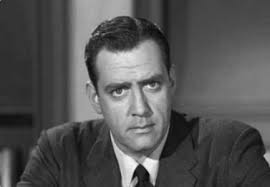
Raymond Burr as Perry Mason, 1957 - 1966. Yes,
he's in black-and-white; color not yet invented.
          All of your old friends are here (if you are over 50 or so): Perry Mason, Della Street, Paul Drake, Hamilton Burger, and Lieutenant Tragg. We know them well from the television show Perry Mason that ran from 1957 to 1966. It was a favorite of my mom's and if she watched it, I probably did, too. (Yes, I first watched Star Trek with my mom, who was attracted to Captain Kirk.) Mason, the defense attorney, used every nuance of law, every scrap of a right or privilege, every possible interpretation of statute. The 1948 book The Case of the Vagabond Virgin, by Erle Stanley Gardner, has it all--familiar characters and savvy law--along with a juicy murder to solve.
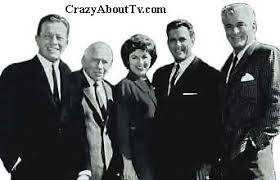
Hamilton Burger, prosecutor; Lt. Tragg police
detective; Della Street, legal secretary; Perry
Mason, defense attorney; and Paul Drake, private
investigator (left to right)
          Vagabond Virgin at last satisfies my desire for a literate mystery that follows the classic rules thereof. Nothing is wasted in this book. Almost every detail--from appearance, clothing, casual utterances, make and model of car, everything--has a direct bearing upon the plot, upon the resolution of the murder mystery. It all becomes a big Bucky ball of causality and inference.

           The Perry Mason books are pot-boilers--somewhat gritty, delving into the seamier neighborhoods, and quite frank about sexuality. This one was urban with forays into the countryside. There is wry wit that often leads to a realization. And the characters are sharply drawn. I knew what each character looked like (not just the ones I knew from TV) and appreciated their personalities. The pace was fast, snappy. I had to keep my brain on or I missed things. It was clear that Gardner was an attorney and that he scoured statutes and case law to build his intricate plots. Mason is a bit on the shifty side...some of his projects border on illegal/unethical practice. But Mason's facility with the law keeps him in the clear every time.

Warren William as Perry Mason in a 1935 film
          In Vagabond Virgin, a businessman is accused of killing his partner. A hitch-hiking young woman is the alibi--or is she? The titular heroine engages in self-exploitation for money, playing the innocent virgin with drivers that pick her up. Her virginal story is so woebegone that the drivers press money (rather than their attentions) upon her.The partner's ex-wife and a mysterious reporter also figure into things. The final resolution of the plot occurs when Mason actually engages in meta-cognition (thinking about how you think) and realizes that he has accepted a batch of assumptions without checking their validity. He rethinks the case from its origins and comes up with a solution that leads to an amazing bit of courtroom drama. The criminals definitely get their comeuppance (also a standard of classic mystery).


         It's fun to be the reader sitting on Mason's shoulder throughout this book, seeing the inside of his maneuverings, getting the inside dope that the police and suspects do not have. The Mason team (Della, Paul, and even Gertie at the switchboard) work smoothly and efficiently, questioning Mason, but generally doing exactly as he directs. He doesn't always disclose all to them, not like he does to his reader.

Erle Stanley Gardner, 1889 - 1970. He worked with a
a group in California that sought to overturn convictions
that came about through inept legal representation.
          Erle Stanley Gardner is a masterful storyteller with a confident and unapologetic world view. Mason does not anguish when he bends the rules. The sexual escapades of the characters (not Mason!) are accepted as is--more faulted for their execution than for their morality. This is refreshing--I'm a bit tired of characters agonizing and self-excoriating, and regretting and seeing both sides of question. (I'm tired of doing it myself!) Mason's certainty and willingness to just move forward with the ends justifying the means keep the books about him cerebral and satisfying--just like a mystery novel (which is NOT real life) should be! Mason is not damaged or changed. He operates as a sort of matrix through which the plot operates and resolves, but is not used up--he's the catalyst, not a reactant.


1940s cover--the book is a
bit risque
          Some of the Perry Mason movies are pretty good. I saw one recently that starred Warren William as Mason and was made in 1935. It had a 1920s New York-type setting (lots of action in high-rises and lots of cabs). William's Mason was quite droll and a bit decadent, which is a bit truer to the books than perhaps the TV series is. Although I am still filtering the TV series through my child-self memories--"adult" content may have gone right over my head. I do remember one episode where someone said "cherche la femme" to Mason. I didn't know what it meant, but I remember Mason's face being tired and melancholy when the line was said.

          If I had more Mason mysteries, I would certainly read them. The Case of the Vagabond Virgin was a delightful diversion from reality and took me into another world. I think that's the true goal of a murder mystery. It's a genre about right and wrong, innocent and guilty, wit versus stupidity. The good and the smart triumph. It's not reality--but it's OK to take a break now and then. I recommend Perry Mason in all of its forms--book, radio, and TV.